Showing posts with label collaboration. Show all posts

2013-02-12

Tacit knowledge in intercultural collaborations and the workplace: A survey


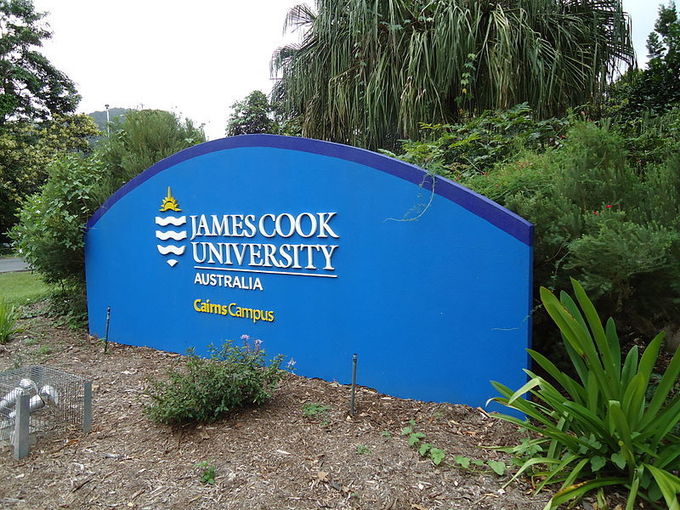
Professor Neil Anderson of James Cook University, Australia is currently leading a study that aims to increase the understanding of the processes involved in intercultural collaborations. In particular, the study focuses on the role of tacit (hidden) knowledge in international collaborative work. If you have been involved in intercultural collaborations, it would be greatly appreciated if you could complete the online survey at:

https://www.surveymonkey.com/s/6XD95XM

Your support in completing the survey will be greatly appreciated. It would also be appreciated if you could send this link to others in your area.


2013-02-08

25 years of the information society in LAC 2000-2025


25 years of the information society in Latin America and the Caribbean is an initiative to take stock of the information society agenda in the region and to analyse and debate options for the future. It includes a review of the evolution of the information society and a public consultation to examine new opportunities, challenges and policies for the future.

See on info25.org

2009-01-10

Wikipedia and knowledge for all

In order to reach out to the rural communities, Wikipedia.com launched a Wikipedia Academy in Chennai, India on December 12, 2008. The Academy is a community driven initiative among online users. It will focus on spreading education and supporting Wikipedia by contributing articles to it. The Academy, which will have various chapters in India, is a voluntary organisation among online users to basically promote education through wikipedia.com.

Wikipedia Founder and iCommons Board Member, Jimmy Wales, launched the African Wikipedia Academy series at CIDA City Campus in Johannesburg just over a year before - in November 2007.

Check out this great video of the first Wikipedia Academy in Africa at CIDA City Campus.


It made a lot of sense that the first South African Wikipedia Academy took place at CIDA City Campus. Wikipedia is dubbed ‘the free encyclopedia’ and CIDA the first ‘free university’ in South Africa, but it is not only the “cost” that these two pioneering initiatives share. Both are founded on the concepts of community contribution: Wikipedia is built by thousands of contributors from around the world who share their knowledge with their fellow language speakers; CIDA is maintained by the students who help run the university, teach young people during their holidays and help pay university costs of other students when they graduate. It is this sense of community and community contribution that has made both Wikipedia and CIDA so successful in delivering quality education to the poor.

Here's another video of the South African Wikipedia Academy launch.

2008-11-20

Intelligent Communities

Creating a More Connected Community with Broadband: An Intelligent Communities ePanel

As friends of the Intelligent Community Forum, we would like to invite you to a special ePanel organized by the Ontario Ministry of Government Services:

What: An online discussion with four leaders of communities named as Intelligent Communities on how their communities are using broadband to help citizens and organizations increase their efficiency, expand their knowledge and improve living standards.

When: Tuesday, November 25, 2008, 9:00 am - 10:30 am EST

Where: http://digitalontario.na3.acrobat.com/intelligentcommunities/
** You must pre-register by emailing digitalontario@ontario.ca **

Minimum Computer Requirements: Pentium II, 128mb RAM, 56kpbs Internet connection, speakers or headphones, most common internet browsers. (For full compatibilities, visit www.adobe.com/products/acrobatconnectpro/systemreqs/)

ePanel Moderator:
Louis Zacharilla, Co-Founder, Intelligent Community Forum

ePanel Experts:
Gordon Kennedy, Former Deputy Chief Executive, Scottish Enterprise, City of Glasgow - 2004 Intelligent Community of the Year

William Lin, Chief Executive Officer, Dragon Telecom, Tianjin, China - Two-time Top 7 Intelligent Community

Lev Gonick, Vice President, Information Technology Services, Case Western Reserve University, City of Cleveland - Two-time Top 7 Intelligent Community

Thomas Hurst, Chief Investment Officer, City of Sunderland - Five-time Top 7 Intelligent Community

Find out how the Intelligent Community Forum defines intelligent communities. Register for the ePanel today - spots are limited! Participants will be able to ask questions, rate content, take quick surveys and post comments.

For more information on ICF and the criteria for evaluating intelligent communities, please visit the Web site: http://www.intelligentcommunity.org

ePanels support the Ministry of Government Services’ (MGS) research into the challenges and opportunities of broadband technology.
2008-02-02

Impact of emerging technology on higher education

The 2008 Horizon Report, the fifth in this annual series, is a collaboration between the New Media Consortium (NMC) (an international not-for-profit consortium of nearly 250 learning-focused organizations dedicated to the exploration and use of new media and new technologies) and EDUCAUSE (a nonprofit association whose mission is to advance higher education by promoting the intelligent use of information technology).


The Horizon Report describes six areas of emerging technology that will have significant impact on higher education within three adoption horizons over the next one to five years. The 2008 report focuses on the following topics;

  • Grassroots Video
  • Collaboration Webs
  • Mobile Broadband
  • Data Mashups
  • Collective Intelligence
  • Social Operating Systems

The two technologies placed on the first adoption horizon in this edition, grassroots video and collaboration webs, are already in use on many campuses. Examples of these are not difficult to find. Applications of mobile broadband and data mashups, both on the mid-term horizon, are evident in organizations at the leading edge of technology adoption, and are beginning to appear at many institutions. Educational uses of the two topics on the far-term horizon, collective intelligence and social operating systems, are understandably rarer; however, there are examples in the worlds of commerce, industry and entertainment that hint at coming use in academia within four to five years.

Each profiled technology is described in detail in the body of the report, including a discussion of what it is and why it is relevant to teaching, learning, and creative expression. Specific examples are listed for each of the six topics.

Download the Horizon Report (PDF)


More on emerging technologies in higher education.

2008-01-31

Social networks for the professions

Social networking is not just the province of young people talking about music on MySpace. It is rapidly becoming an important Web 2.0 tool for professionals to stay in touch and collaborate with the members of their various communities of interest and practice. Here are just a few.


Nature Network

Nature Network is an online meeting place scientists to gather, talk and find out about the latest scientific news and events. Science is an international endeavor and deserves a global stage for discussion. Scientists can also benefit from interactions at the local level, which is why Nature Network has local city hubs. As with other social network sites, there are many interactive services:

  • Create your own personal profile page and describe yourself and your research.
  • Set up a group for your lab, department, institution or topic.
  • Join and have discussions with group members.
  • Build your own online network of like-minded people.
  • Discuss what's going on in your field; post comments on other people's blogs.
  • Search and browse the listing of all upcoming seminars and conferences.
  • Read the latest news, views and historical insights and then write comments.
  • Browse local jobs listings.

The website is published at: http://network.nature.com/


BioMedExperts

The combination of scientific knowledge and experience is the key success factor for biomedical research projects. Bringing the right researchers together and allowing them to grow their professional network is the ultimate goal of biomedexperts (BME) - a social networking platform for the life-science research community. The comprehensive system of pre-populated expert profiles, coupled with the ability to analyze all associated professional connections within the co-author network, allows scientists and researchers across organizations the ability to share data and collaborate in ways never before considered. The website is published at: http://www.biomedexperts.com/


SciTechNet(sm): Science and Technology Social Networking Services

SciTechNet(sm) is a blog that collects social networking sites in the Sciences and Technology. It is published at: http://scitechnet.blogspot.com/


Friends:Social Networking Sites for Engaged Library Services

This blog is devoted to the use of online social networking sites for any and all types of library-related programs or services. Maintained by Gerry McKiernan, Iowa State University Library, it is published at:http://onlinesocialnetworks.blogspot.com/


2008-01-30

Tribal tension and human pyramids of hope

Since I left Kenya on January 15, the situation has worsened. It is such a shame that ethnic relations in the country, once the shining example of peaceful co-existence in Africa, are deteriorating so rapidly.

There is no need for this tribal violence in Kenya. But there is hope:


Human Pyramide is a peace effort of African Acrobats http://www.nafsiafriacrobats.org/ from different tribes showing that peace and cooperation in Kenya is possible.


If you want to give Kenyans a hand in this hard times please go to http://www.worknets.org/wiki.cgi?HelpKenyans


WorkNets surveys the different ways that "independent thinkers" around the world are helping Kenyans in this time of crisis.


More on Kenya.

2008-01-21

The Participative Web: Policies and best practices

Using an expanding array of intelligent Web 2.0 services and applications, a rapidly increasing number of people and organisations are creating, distributing and exploiting user-created content (UCC) and being part of the wider participative web. What are the policy implications and what are the best practices for NGOs wishing to participate?


The book "Participative Web and User-Created Content: Web 2.0, Wikis and Social Networking" describes the rapid growth of UCC and its increasing role in worldwide communication, and draws out implications for policy. Questions addressed include: What is user-created content? What are its key drivers, its scope and different forms? What are the new value chains and business models? What are the extent and form of social, cultural and economic opportunities and impacts? What are the associated challenges? Is there a government role, and what form could it take?


You can access this PDF e-book free online.


In his post to Social Signal, Alexandra Samuel lists six "Best practices for non-profits using web 2.0":

  1. Focus your site on a particular goal or conversation, rather than a general topic.
  2. Invite your community to make contributions other than money, e.g., asking them to share their personal experiences.
  3. Succeeding in an internetworked environment means working effectively with others, collaborating, and interacting, e.g., engaging with conversations and ideas on other blogs.
  4. Don't feel that Web 2.0 means building your own online community - use existing web tools, e.g, Flickr, Facebook, YouTube.
  5. Remember that for organizations that have been all about the message, it is a frightening adventure to bring your audience into the conversation in public.
  6. Stay current with how other non-profits are using Web 2.0, and learn from their experiences.


More on Web 2.0 and participation


2007-12-02

Blogs

A video by Lee LeFever for people who wonder why blogs are such a big deal.


2007-10-28

Google Docs in Plain English

An important aspect of Web 2.0 for the professions (e.g., academics) is the ability to work together in a collaborative space.

Here is a video by Lee Lefever on how to create and share documents, spreadsheets and presentations online using Google Docs.


More on Web 2.0 and collaboration.