Showing posts with label Asia. Show all posts

2013-04-28

Integrating problem-based learning with ICT for developing student-teachers’ content knowledge and teaching skill


Authors:
Mehdi Karami, Shahid Madani University of Azerbaijan, Iran
Zohreh Karami, Farhangian University of Hamadan, Iran
Mohammad Attaran, University of Malaya, Kuala Lumpur, Malaysia

The aim of this research was studying the effect of integrating problem-based learning with Information and Communications Technology (ICT) on developing content knowledge and teaching skill of trainee teachers. The research design was a quasi-experimental one, and the participants were elementary education trainee teachers of Shahid Bahonar teacher training center of Hamadan, Iran. Two groups were given tests of theory and practice on teaching mathematical concepts at elementary school, and then a multivariate analysis of variance (MANOVA) was conducted to compare the pretest-posttest scores. There was a significant difference, in both multivariate and univariate analyses, in scores. The findings suggest that trainee teachers who integrate problem-based learning with ICT in solving a problem may develop more professional content knowledge and teaching skill than those who merely employ ICT.

Read more at:  http://ijedict.dec.uwi.edu//viewarticle.php?id=1578


2013-04-24

Agriculture Nepal


Stewart-Marshall's insight:
Agriculture Nepal is a social network platform to gather all the Nepalese agriculturist on the single place. Our ultimate goal is to build communications, share information, create opportunities, and develop a nationwide agriculture data bank.

Visit the site at: http://www.agriculturenepal.com/

2013-04-15

'#aiww: The Arrest of Ai Weiwei' Puts Digital Dissent in the Limelight


LONDON — At a theatre here, the characters and elements of a serendipitous meeting came together: A play about a dissident Chinese artist starring a British-born Chinese man and reviewed by an American whose father defected from a repressive communist nation.
Howard Brenton's #aiww: The Arrest of Ai Weiwei debuted here Thursday, with the hashtag title an homage to Twitter's significance for the Chinese artist who uses the platform and his 200,000 followers to promote digital rights and avoid censorship from the Great Wall of communism. Mr. Ai uses social media as a tool for political dissent, challenging the state's control with acts like publishing the names of 5,335 student victims who died in the magnitude 7.9 Sichuan earthquake in 2008 (which he attributes to the collapse of poorly built government housing).

Read more at: http://mashable.com/2013/04/12/arrest-of-ai-weiwei/


Geocoding and public aid data in Nepal


The Government of Nepal (GoN) recently hosted the AidData team on our first geocoding launch trip
as part of the Higher Education Solutions Network (HESN). We’re writing to update on some exciting developments underway in Nepal that are quickly taking AidData’s work to a broader audience of government officials, donors, and concerned citizens.
The GoN has been operating an Aid Management Platform (AMP) since 2010 with admirable results. AMP Nepal currently has information on nearly 700 development projects (both on- and off-budget) representing over $US 6 billion in disbursements, including over $1 billion in fiscal year 2012 alone. GoN officials use AMP for internal reporting, district-level aid analysis, and an annual public Development Cooperation Report, among other things. In 2012, with the support of AusAID, AidData geocoded over half of the AMP project portfolio. All remaining AMP projects will be geocoded in 2013 under the USAID HESN award.

Read more at: http://blog.aiddata.org/search/label/Nepal


2013-04-13

Open Educational Resources in Malaysian Higher Learning Institutions


"OER is a burning topic in Malaysia, and many more institutions are in the process of embracing this movement." (Zaid Ali Alsagoff)


2009-08-28

MDG indicators for Asia and the Pacific 2009

The Key Indicators for Asia and the Pacific 2009 annual statistical data book has just been published by the Asian Development Bank (ADB). It presents the latest available economic, financial, social, environmental, and Millennium Development Goals (MDG) indicators for regional members of ADB. Data are grouped under MDG and Regional Tables, together with nontechnical explanations and brief analyses of the MDG achievements and developments.

This issue includes:
Part I: A special chapter on “Enterprises in Asia: Fostering Dynamism in SMEs”
Part II: Millennium Development Goals
Part III: Regional Tables

View the full document PDF: 13,383 kb | 324 pages ]


The special chapter in Part I looks at the impact of the economic crisis on workers and enterprises, including small and medium-sized enterprises (SMEs). It also discusses how to foster greater efficiency in SMEs once the crisis has played out. A key channel through which the economic crisis has affected enterprises is through the reduction in Asian exports. While SMEs tend to work for the domestic rather than export markets, some of the most dynamic SMEs export or supply inputs to larger export dependent enterprises. Moreover, many SMEs will be affected by the fall in domestic demand as unemployment rises and household incomes contract. In the short run, government efforts at boosting aggregate demand, as well as specific policy initiatives to assist SMEs’ access to finance, should help enterprises cope with the crisis. But over the longer-term, policies must help SMEs adopt modern technologies and raise their productivity. Above all, governments should avoid creating incentives for small enterprises to remain small and operate with outdated technologies. Fostering dynamism in SMEs will not only help their owners, but also workers at large. In this way, a dynamic SME sector can play an important role in the rebalancing of the economies of Asia by raising household incomes and thus domestic demand.

2009-02-24

CEMCA: ODL for Development in Asia

(Modified from Commonwealth Connections "InFocus", February 2009)

The Commonwealth Educational Media Centre for Asia (CEMCA) is a regional service of COL based in New Delhi, India. CEMCA’s purpose is to promote the meaningful, relevant and appropriate use of information and communication technology (ICT) to serve the educational and training needs of Commonwealth member states in Asia.

Working in partnership with COL, other international agencies, educational institutions and non-governmental organisations (NGOs), CEMCA is effectively expanding the use of open and distance learning (ODL) for development through a number of innovative initiatives, for example the "EasyNow" and “Science for Women” projects.

EasyNow

CEMCA’s EasyNow is a platform that brings together easy-to-use technologies that enable teachers to create learning materials in an array of delivery modes. What makes EasyNow special is that it allows multiple deliverables from a single electronic source. For instance, a classroom lecture captured on video can be re-packaged and delivered in multiple forms including:

• A video lesson,
• An enriched video incorporating graphics,
• An audio lesson,
• A print-based output using text-to-speech tools,
• A slide show using PowerPoint or other presentation packages, and
• A print-based format.

EasyNow also integrates into formats for learners with visual impairments. EasyNow offers fast downloads, which is particularly important for those with low bandwidth Internet connections.

CEMCA has successfully demonstrated the efficacy of EasyNow in several ODL institutions in India, Malaysia, Singapore and Sri Lanka. In five-day training workshops, participants working in groups master the simple technologies, record their lessons and deliver them in web-enabled ODL and other formats. Since EasyNow is based on a basket of open source technologies, CEMCA can easily add on features to meet the institution’s need, demand and thrust area.
http://www.cemca.org/easynow


Science for Women

“Science for Women: Health and Nutrition” is a programme that provides illiterate women in resource-poor settings with access to learning about important health issues through community radio.

Initiated by the Indian Department of Science and Technology and implemented by CEMCA, Science for Women is an interactive radio series currently involving 12 community radio stations. This is a participatory process that includes the students and listening communities – the women learn radio production skills and create relevant content using information provided by university partners.


The focus is on health and nutrition, which addresses a significant challenge. While women traditionally bear primary responsibility for the well-being of their families, they are often denied access to education, health care services, job training, and the freedom to use health and family planning services. Women are also often discriminated against as consumers of services, which can lead to neglect of their own heath and well being. The overarching goal of “Science for Women” is behavioural change; an increase in the knowledge, awareness and practice of women towards health and nutrition for themselves and their families.

Every day a 15- to 30-minute “Science for Women” programme is broadcast on the community radio stations with a reach estimated at 12,000 women (and inevitably many men as well) across India. CEMCA is launching a second phase with participation being expanded to 20 community radio stations.

In addition to providing valuable health information, “Science for Women” is creating a bank of content that can be re-used. It is helping women gain skills as announcers, interviewers, writers and programme contributors, while also providing alternate means of livelihood for the community. And it is helping community radio stations gain an identity, an audience and a purpose.
http://www.cemca.org/sciencewomen.htm

2009-01-10

Wikipedia and knowledge for all

In order to reach out to the rural communities, Wikipedia.com launched a Wikipedia Academy in Chennai, India on December 12, 2008. The Academy is a community driven initiative among online users. It will focus on spreading education and supporting Wikipedia by contributing articles to it. The Academy, which will have various chapters in India, is a voluntary organisation among online users to basically promote education through wikipedia.com.

Wikipedia Founder and iCommons Board Member, Jimmy Wales, launched the African Wikipedia Academy series at CIDA City Campus in Johannesburg just over a year before - in November 2007.

Check out this great video of the first Wikipedia Academy in Africa at CIDA City Campus.


It made a lot of sense that the first South African Wikipedia Academy took place at CIDA City Campus. Wikipedia is dubbed ‘the free encyclopedia’ and CIDA the first ‘free university’ in South Africa, but it is not only the “cost” that these two pioneering initiatives share. Both are founded on the concepts of community contribution: Wikipedia is built by thousands of contributors from around the world who share their knowledge with their fellow language speakers; CIDA is maintained by the students who help run the university, teach young people during their holidays and help pay university costs of other students when they graduate. It is this sense of community and community contribution that has made both Wikipedia and CIDA so successful in delivering quality education to the poor.

Here's another video of the South African Wikipedia Academy launch.

2008-08-28

ICT4D Research Grants

The Strengthening ICT4D Research Capacity in Asia (SIRCA) Programme is pleased to announce a call for grant proposals.

The SIRCA Programme seeks to identify future research leaders and to facilitate their development through the support of research grants. The awards are intended to ensure capacities to conduct research in the area of Information and Communications Technology for Development (ICT4D or ICTD) are built in Asia. This applies particularly to emerging researchers based in Asia who are relatively new to ICTD research and interested in undertaking theoretically-based and methodologically rigorous research. Additionally, these applicants would benefit from concerted capacity building exercises including a mentorship arrangement. In particular, the program promotes broad-based high-quality multidisciplinary research in ICT development, e-services, new media use and social impact, and policy for the benefit and advancement of individuals, organizations, nation and society.

PROPOSAL GUIDELINES
  • Applicants must register online at www.ntu.edu.sg/sci/sirc/sirca with their name, project title, email address and country of research by 29th September 2008.
  • Applicants are free to choose relevant topics within the overall ICTD discipline.
  • Proposals must be received via email by 13th October 2008. Send email submissions to sirca@ntu.edu.sg with “SIRCA Proposal” in the subject line of your message. Attachments must be in MS Word, MS Excel or PDF and should be labelled with your name (for example: Jane_Doe_Info_Sheet.doc or .docx or .pdf).
Visit the following web pages for additional information about the programme and the call for proposals:

SIRCA Brochure

SIRCA Research Grant Proposal Guidelines

SIRCA Programme Secretariat
Email: sirca@ ntu.edu.sg
Website: www.ntu.edu.sg/sci/sirc/sirca

2008-07-21

ICT for Social Change

"One laptop per child" - It was the ambition of Kevin Rudd during the last election in Australia and it is the plan being realised by Nicholas Negroponte of MIT. The only way Professor Negroponte can realise his dream is by having cheap laptops, costing $100, or eventually, less. How is this done? And what difference do these computers make in the villages of Africa, South America and Asia? Professor Negroponte, founder of the Media Lab at MIT and author of the bestseller Being Digital, talks to an audience in Boston, Massachusetts in "One laptop per child" on ABC Radio National, presented by Robyn Williams.


ICTs bring Ugandans together

Father Joseph Okumu on the use of Inveneo ICTs and BOSCO systems to bring Ugandans together.


2007-11-19

e-Bario: An excellent example of community engagement using ICT

I have seen several successful examples of communities benefitting from ICT over the last few years. Yesterday's post on the "E-Bario Knowledge Fair" reminded me of one that I regard as one of the most successful - the e-Bario project.


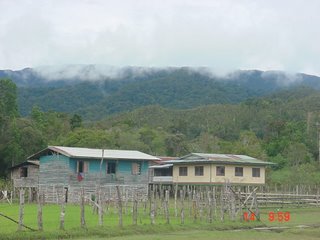
The district of Bario comprises a small group of remote Kelabit communities in the highlands of Sarawak in Malaysia. Only about 1000 people out of approximately 5000 Kelabit remain in the highlands, the rest having moved away in pursuit of jobs and education.


Photograph by Gary Loh Chee Wyai (2006)

The e-Bario project was coordinated by Universiti Malaysia Sarawak and financially supported by the Demonstrator Application Grant Scheme and Canada International Development Research Centre (e-Bario 2004). The project connected the village to the Internet, not only to provide a means for the villagers to communicate with their relatives and others outside Bario, but also "to identify opportunities for such communities to develop socially, culturally and economically from the deployment of the technologies" (Bala et al 2004, p.116).


The researchers realized the importance of engaging and empowering the community, and of placing the emphasis on the people and the process, not the technology. They identified with and learned about life in the village from the community, and the community learned about ICT from the researchers. They adopted a Participatory Action Research (PAR) model, in which community members performed major portions of the research.


In their analysis of the e-Bario project, Bala et al (2004) conclude that a prerequisite for success and sustainability is the use of a collaborative approach in which the community participates fully in all stages and parts of the project. They also suggest that since the information solutions span education, health, commerce, agriculture and culture as well as communications, there is no single agency that carries responsibility or authority for community development by means of ICTs. Instead, a range of agencies needs to be mobilized and coordinated for full benefits to flow to the community (Bala et al 2004, p.124).


Bala, P., Harris, R.W. and Songan, P. (2004) "E Bario project: In search of a methodology to provide access to information communication technologies for rural communities in Malaysia". In Marshall, S., Taylor, W., & Yu, X. (Eds.) (2004) Using Community Informatics to Transform Regions. Idea Group Publishing, London., pp.115-131.


e-Bario. (2004). e-Bario. Website accessed 15 August 2007 at: http://www.unimas.my/ebario/


Wyai, Gary Loh Chee (2006). Bario: the Land of the Kelabits - my third day. Website accessed 19 August 2007 at: http://ebario.blogspot.com/2006/04/my-third-day-at-bario.html

2007-11-18

E-Bario Knowledge Fair: The Kelabit's Gift to Malaysia

Registration for the e-Bario Knowledge Fair, 6-8 December 2007 is now open. This is a unique event, bringing together researchers, practitioners and policy makers with the direct beneficiaries of their deliberations.

The e-Bario Knowledge Fair is a multi-disciplinary conference being held in the remote village of Bario, in the Kelabit Highlands of Sarawak, one of the states of East Malaysia on the island of Borneo. Bario is the traditional home of the Kelabit People, one of Malaysia's smallest indigenous ethnic minority groups. It is also the home of the multi-award winning e-Bario telecentre project that introduced computers, telephones and the internet to this hitherto isolated community.

The Knowledge Fair is being held to showcase how this highly distinctive and resourceful community has appropriated ICTs for their own betterment, on their terms and in a way that is wholly compatible with their long-held and cherished traditions and culture.

Furthermore, the Knowledge Fair is hosting the UNDP Workshop on E-Inclusion and Media for Indigenous Peoples, as a forerunner to a further programme on e-inclusion for Asia’s Indigenous Peoples. The combined outputs of these events are intended to form an important supplement to the recent United Nations Declaration on the Rights of Indigenous Peoples insofar as it relates to the right of access to information and access to ICTs for Indigenous Peoples; especially as two thirds of the world’s Indigenous Peoples live in Asia and almost all live in relatively remote areas with meagre resources.


More on the Kelabit of Sarawak and Malaysia