Showing posts with label mobile technology. Show all posts

2013-06-08

20 Important African Startups to Watch


Kenya's huge success with mobile money and the M-Pesa platform has launched Africa into the startup spotlight.
Whether ecommerce in Nigera, price comparison in South Africa or mobile advertising in Tanzania, African startups are changing the continent.

Read more at: http://mashable.com/2013/06/06/african-startups/


2013-05-23

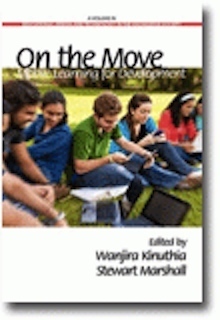
On the Move: Mobile Learning for Development


Edited by:
Wanjira Kinuthia, Georgia State University
Stewart Marshall, The University of the West Indies

This a recently published book on how some educators have embraced the opportunities afforded by mobile learning in developing and resource challenged contexts.
The book will appeal to elected public/government representatives, public service agencies, community groups, regional development bodies, researchers, educational technologists and others interested in mobile learning. Students on senior undergraduate or postgraduate courses in educational technology, education, development studies, information technology, information systems, business, health, and social work will find this book useful in their studies related to the application of mobiles in learning and development.

More details: http://onlineanddistancelearning.com/mobile-learning-book


2013-05-09

A framework for mobile learning


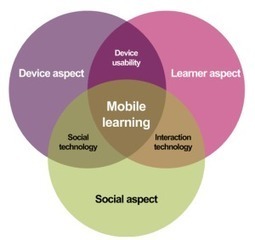
In order to move from theory to practice in mobile learning, one needs a framework. The JISC Mobile InfoKit introduces its frameworks discussion by listing six ‘course aspects’ (my term) which may be behind the drivers for mobile learning. The first four are pedagogical approaches. In sum, they are a pretty good, though not comprehensive, list of the ‘ideas behind the drivers’ toward mobile learning.

Read more at: http://placesmobile.wordpress.com/2013/05/08/a-framework-for-mobile-learning/


2013-04-29

Mobile Phones Deliver Millions of E-Books to Developing World


Non-profit Worldreader has brought more than half a million e-books to children in Africa via the 10,000 Kindles it's distributed. After a one-year pilot program, the organization has launched Worldreader Mobile, a way for any feature phone user with a 2G connection to read more than 1,400 books for free.
"Feature phones are omnipresent in the developing world. They're people's lifelines; they're where they get their access to payments and the Internet," Susan Moody, Worldreader's director of marketing and communications, tells Mashable. IPhones and similar smartphones may be buzzworthy, she says, but they apply to a proportionally small number of people. Five billion people are using feature phones that run on 2G networks.

Read more at: http://mashable.com/2013/04/17/worldreader-mobile/


2013-04-22

On the Move: Mobile Learning for Development


This book integrates research, action research, best practice and case studies detailing how some educators have embraced the opportunities afforded by mobile learning. In particular, it brings together a range of scenarios, solutions and discussions relating to mobile learning in development and other resource challenged contexts.

Read more at the IAP site: http://www.infoagepub.com/products/On-the-Move


2013-04-18

Mobile Learning: Literacy for Rural Women in Pakistan


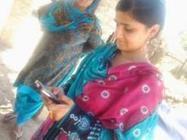
This United Nations Educational, Scientific and Cultural Organization (UNESCO) distance post-literacy project in Pakistan is based on mobile technology. Women are able to reinforce their newly gained literacy by accessing and sending mobile phone text messages. UNESCO implemented the "Mobile Based Post Literacy Pilot Project" in its initial phase in 2009 in partnership with Mobilink Pakistan and BUNYAD Foundation and, with additional partners, initiated a third phase in March 2012 using other information and communication technologies (ICTs) in the classrooms during the teaching cycle, including DVDs.

Read more at: http://www.comminit.com/global/content/mobile-learning-literacy-rural-women-pakistan


2013-04-16

The Power of Mobile: Saving Uganda's Banana Crop


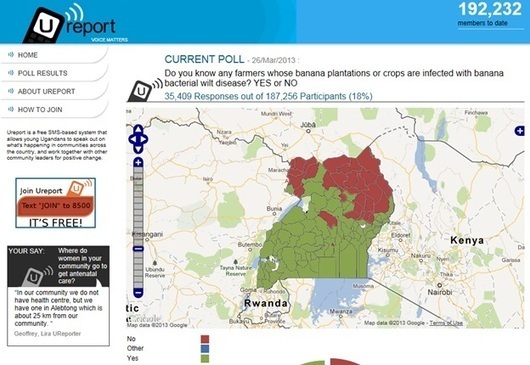
Earlier this year, my two ICT colleagues, Merrick Schaefer and Joshua Goldstein, identified a number of innovative ICT solutions that have been developed and implemented by UNICEF’s Technology for Development (T4D) team. One of them is Ureport (www.ureport.ug), which is a network of 190,000+ volunteers across Uganda who use mobile technology to report on various issues that are of interest to UNICEF and other development partners.

Read more at: http://blogs.worldbank.org/ic4d/the-power-of-mobile-saving-ugandas-banana-crop


2013-04-12

Smart Bracelet Protects Aid Workers in the Field


When fashion and technology mix, the results can garner unwelcome attention. And that’s just what the makers of this smart bracelet are hoping will happen.
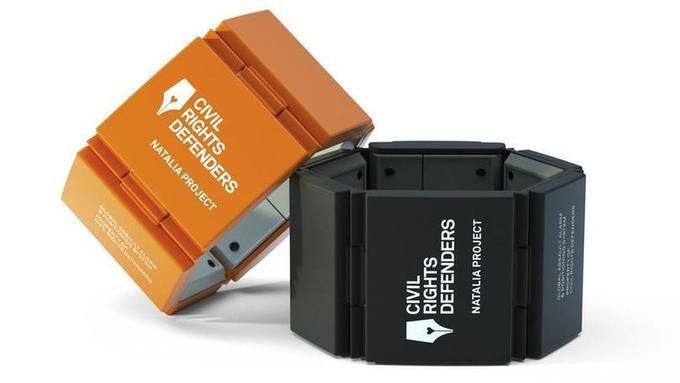
A new high-tech wristband recently released to civil-rights and aid workers triggers an alarm when the wearer is in danger.
The greatest threat to workers is the stealth nature of attacks. These bracelets remove that danger.
GPS (basic mapping) and GSM (mobile phone) technology work together as a personal alarm that sends information about the wearer when danger is imminent. These alerts don’t simply go to police and co-workers; they are posted on Facebook and Twitter, signaling the world of an attack within minutes.

Read more at: http://mashable.com/2013/04/12/natalia-smart-bracelet/


2013-04-10

Brazilian chief uses technology to help save his tribe and curb deforestation


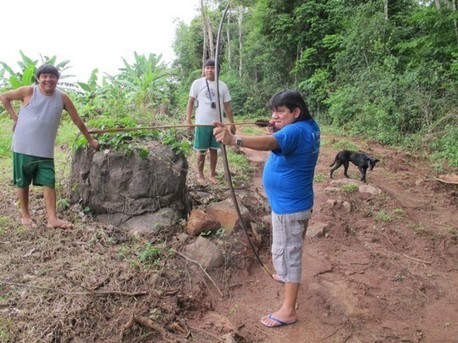
Almir Surui once hunted with a bow and arrow. He now uses technology in bid to save pristine land.
He can still handle a bow. But Chief Almir Narayamoga Surui says his weapon of choice is technology: Android phones to monitor illegal logging, hand-held Global Positioning System devices to map territory and Google Earth Outreach to show the world what a well-managed forest looks like.
Wielding the tools of the 21st century, the 1,300-member tribe has delved into a complex scheme in which governments or companies pay for forest preservation, contributing to a system that, if fully realized, would help end large-scale deforestation. By determining how much carbon is prevented from being released if the trees on Surui lands are left standing, the tribe hopes to sell carbon credits internationally to offset greenhouse gas emissions in developed countries.

Read more at: http://www.washingtonpost.com/world/the_americas/brazilian-chief-uses-technology-to-help-save-his-tribe-and-curb-deforestation/2013/03/26/097b9338-84e7-11e2-a80b-3edc779b676f_story.html

2013-04-07

Mobile Phones and Gender Inequality: Can We Hear Her Now?


While the growth of mobile phones is undeniably impressive, when we look at issues more closely, mobile phones are far from being the panacea that some purport it to be. This master thesis [PDF] by Kari Mackey adds to a literature that examines the relationship between mobile phones and gender inequality.

Read more at: http://democracyspot.net/2013/04/06/mobile-phones-and-gender-inequality-can-we-hear-her-now/


2013-04-05

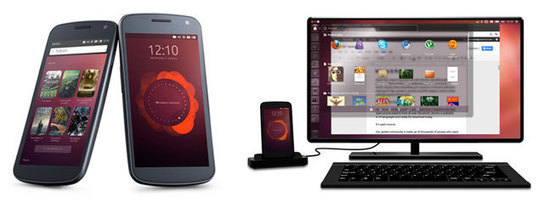
Will the Ubuntu Phone Rock the African Software Development Market?


Ubuntu is shooting for 200 million users by 2015, and with the announcement of the Ubuntu Phone and that they’re building the national operating system for China, there may be a lot of traction to be had.
Reading their material and watching Richard Collins, Ubuntu Mobile product manager at Canonical talk about what the phone will do, you can’t help but think that there’s something bigger here. Mobile phones these days are computers. Apple’s iPhone 5 has the same amount of processing power – and not just specs, but real benchmark performance – as the first generation Macbook Air. Ubuntu’s promise to make their OS available through a phone could be the melding of the two worlds that tablets have yet to be – the one device with the portability and power-consumption properties of a phone and the productivity of a desktop. Maybe.

Read more at: http://www.ictworks.org/news/2013/04/03/will-the-ubuntu-phone-rock-the-african-software-development-market/


2013-04-03

New apps transforming remote parts of Africa


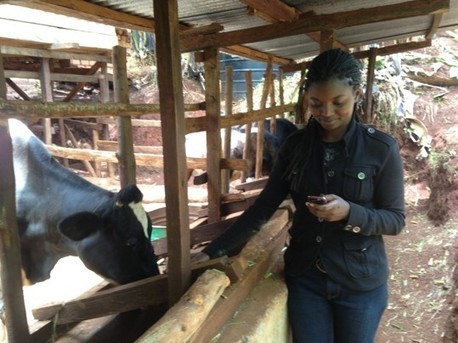
An app called iCow is an example of how mobile phone technology is transforming lives in Africa.
For generations, breeding cows in the rural highlands of Kenya has hinged on knowledge and experience passed down from parents to children. But Mercy Wanjiku is unlike most farmers. Her most powerful tool is her cellphone, and a text messaging service called iCow.
The service informs her when her cows are in heat, which feed might boost their milk output and what their fair market price is. And when she needed a veterinarian recently, she relied on the service’s extensive database. “Otherwise, it would have been hard to find someone qualified in my area,” said Wanjiku, a 29-year-old farmer in Mweru, a village about 100 miles north of the Kenyan capital, Nairobi.

Read more at: http://www.washingtonpost.com/world/africa/new-apps-transforming-remote-parts-of-africa/2013/03/31/2149f93a-9646-11e2-8764-d42c128a01ef_story.html


2013-04-01

How do Mobile Applications Benefit the Education Sector


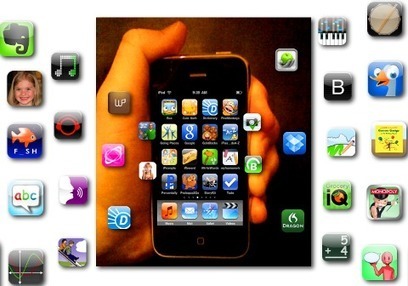
In 2007, when the iPhone made its debut, there was little doubt that it would revolutionize the mobile phone industry. But at the time, few imagined that it would spawn a multibillion-­dollar market for mobile applications, and fewer imagined that this market might become a significant one for children.
Less than six years later, more than a quarter of all parents have downloaded apps for their children to use. Babies have achieved virtual celebrity for mistaking a magazine for a broken iPad, children now learn to “swipe” before they can tie their shoes, and tweens and teens coveted the iPad over any other gift holiday season. Today’s children will benefit if apps become an important force for learning and discovery.
 
Read more at: http://ictpost.com/2013/03/28/how-do-mobile-applications-benefit-the-education-sector/


2013-03-31

Understanding “Foregoing” Behavior at the Base of the Pyramid in Kenya


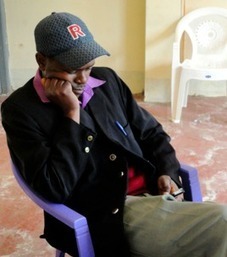
At the end of 2012, infoDev released a study, conducted by iHub Research and Research Solutions Africa, looking at how mobile phones are being used by those at the economic base of the pyramid in Kenya (living on less than US$2.5 per day). The study, funded by the Ministry for Foreign Affairs of Finland and UKaid, covered urban and rural areas of 6 districts in Kenya. Its findings are not nationally representative, but comparisons with representative surveys show no significant differences for key indicators, such as phone ownership.
Of the many findings revealed in the report, one particular behavior captured a lot of attention - the fact that 1 in 5 respondents interviewed had foregone some usual expenditure in order to reload their mobile phone with credit.

Read more at: http://blogs.worldbank.org/ic4d/understanding-foregoing-behavior-at-the-base-of-the-pyramid-in-kenya


2013-03-21

A bank in your pocket: The mobile money revolution in Tanzania


Increasingly, people around the world, especially in Africa, are paying their school fees, healthcare and utility bills using mobile phones today. Businesses use mobile money phones to pay their staff and suppliers. Poor people who have never entered a bank are using mobile services to send or receive remittances and to save their money.
‘Mobile money’, as it has been dubbed, is growing at an amazing pace on the continent and at an even faster rate in East Africa.

Read more: http://blogs.worldbank.org/africacan/a-bank-in-your-pocket-the-mobile-money-revolution-in-tanzania


2013-03-15

Computers and cellphones in the developing world


A case study for our World Development text book
The number of people with access to mobile phones in developing countries surprises many in the developed world. According to the IAMAI (Internet and Mobile Association of India) there were 120 million people logging on to the internet each week in India at the start of 2012. That is nearly twice the total population of the UK - but it still represents only a small proportion (8.2%) of the 1.2 billion Indian population. The majority of internet users are male (83%) urban dwellers and only 24 million people living in rural areas have access to the internet. The Indian government has often stated its belief that increased internet access would bring huge educational and commercial benefits to the country and been involved in projects that attempted to provide cheap computers to poorer sections of the population.

Read more: http://newint.org/books/reference/world-development/case-studies/2013/03/14/computers-cellphones-in-developing-world/


2013-02-28

Can pupils respect 'teacher on wheels'?


Rory Cellan-Jones checks out a new kind of robot that developers say will help teachers educate from a distance.
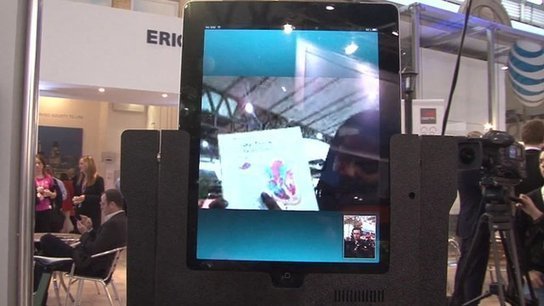
On show at Mobile World Congress in Barcelona this year was a simple type of robot designed to allow teachers to educate from long-distance, harnessing wireless technology.
The 'Skype-enabled' telepresence robot, designed to work with most major tablets, is called MantaroBot and is made by TeleMe.
The BBC's Rory Cellan-Jones watched a demonstration by Ronda Zelezny-Green, who teaches at Royal Holloway, University College of London, and Andrew Parker, a director of Connected Experiences at the GSMA, the body which runs Mobile World Congress.

Watch the video at: http://www.bbc.co.uk/news/technology-21592189


2013-02-24

Mobile on the move - Mobile learning publication


A showcase of IICD's mobile projects in economic development, education and health in Africa and Latin America and some of the lessons learned.
Mobile phone usage is exploding in developing countries. Africa alone had more than 500 million mobile telephone subscribers in 2011. Mobile learning or ‘m-learning’ services therefore play a growing role in IICD’s education, health and economic development programmes. This publication shows some examples of the projects with a mobile component that IICD supports.

 More details at: http://www.iicd.org/about/publications/mobile-on-the-move-mobile-learning-publication/

MPrep: Making education mobile for the world


Though Kenya has emerged as a regional powerhouse for mobile innovation, many of its future visionaries remain burdened by the structural challenges—overcrowding, underfunding, and lack of access—facing the 9 million Kenyan children in primary school.
The problem is especially daunting in rural areas, where more than two out of three current students will fail their classes, including 80 percent of girls.
In response, MPrep founder Toni Maraviglia designed the app to make it possible for teachers to deliver quality, one-on-one attention to students, and to monitor their performance in detail, even remotely—all just a text message away in a country with widespread mobile access.


2013-02-19

ict4D: the complex mLearning challenges for specific ethnic groups


Leslie Dodson from the University of Colorado on "The mobile utitly gap and literacy challenges in oral-language communities: sms use by Berber women".
These are my live blognotes coming from UNESCO's mobile learning week enriched with tweets from Ronda (@glam_mobileleo).
Leslie used an epigraphic research approach and working in the field for 8 to 9 months.
For those interested in the number of challenges that can be encountered when diving into a mLearning project with very specific target learners... this is it!

Read more at: http://ignatiawebs.blogspot.com/2013/02/ict4d-complex-mlearning-challenges-for.html